Ancient Oracle Bones and Climate Data Reveal How Pacific Storms Devastated Early Chinese Civilizations
Scientists have uncovered compelling evidence that intense Pacific typhoons contributed to the collapse of ancient Chinese settlements thousands of years ago, using an innovative combination of archaeological findings, climate records, and ancient divination texts to piece together this historical puzzle.
Research led by meteorologist Ke Ding from Nanjing University demonstrates how powerful storms originating in the Pacific Ocean brought catastrophic flooding to inland Chinese civilizations approximately 3,000 years ago. The study connects seemingly unrelated evidence spanning vast geographical distances to reveal how climate patterns affected human societies in ancient times.
Multiple Civilizations Under Siege
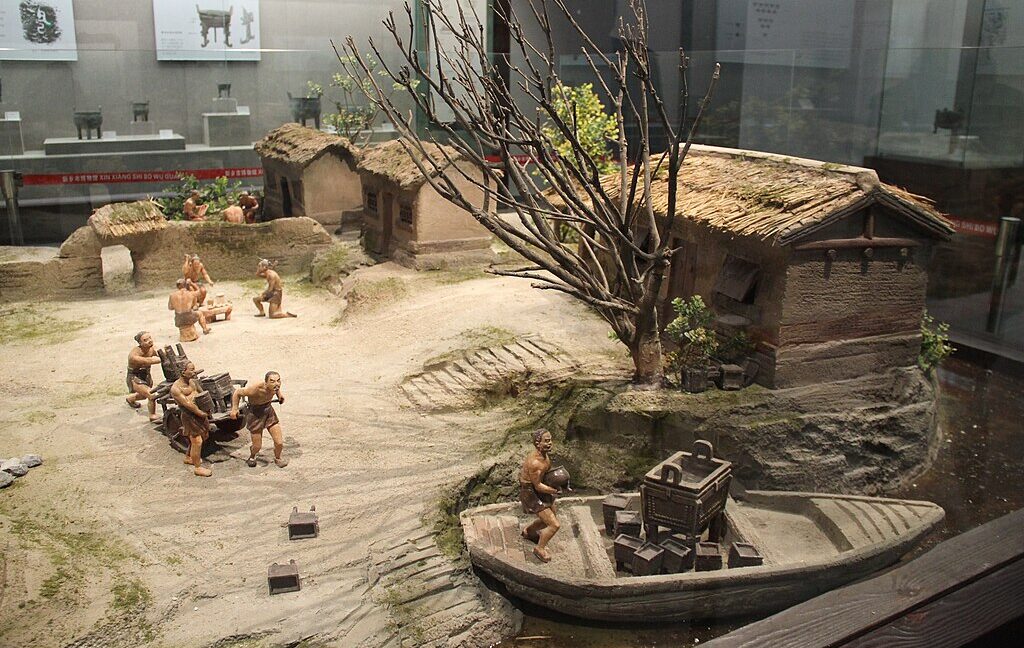
During this period, two major civilizations thrived in central China. The Shang Dynasty dominated the Yellow River Valley, developing China’s earliest writing system while establishing their capital at Yinxu. Simultaneously, the Shanxingdui culture flourished on the Chengdu Plain in southwestern China, creating impressive bronze sculptures, golden masks, and jade artifacts that they ceremonially buried in large pits.
Archaeological evidence reveals that between 2,500 and 4,000 years ago, these prosperous societies experienced severe disruptions. Population centers were abandoned, communities relocated to higher ground, and significant cultural and political transformations occurred. While these civilizations eventually recovered and rebuilt, the temporary upheaval left clear traces in the archaeological record.
Decoding Ancient Storm Patterns
Researchers employed paleotempestology—the study of ancient storm activity through sediment analysis—to reconstruct historical typhoon patterns. By examining coastal sediments from China, South Korea, and southwestern Japan, scientists identified periods of heightened storm intensity that coincided with the archaeological evidence of societal disruption.
The data revealed that westward-moving typhoons reached peak intensity around 2,800 years ago, while northward-tracking storms were most severe approximately 3,800 and 3,300 years ago. These patterns correlate with a significant shift in Pacific climate conditions, including more frequent and intense El Niño events off the Peruvian coast.
The Mechanics of Inland Flooding
Computer simulations using advanced weather modeling revealed how coastal typhoons could devastate communities hundreds of miles inland without making direct landfall. The storms generated powerful easterly winds that transported massive amounts of water vapor across the continent to the plains where major civilizations had established their settlements.
Both the Shang Dynasty and Shu civilizations strategically located their capitals on plains adjacent to mountain ranges—typically an advantageous position for agriculture due to orographic precipitation. However, this positioning also made them vulnerable to extreme rainfall events when typhoons disrupted normal atmospheric circulation patterns.
The research indicates that increased typhoon intensity resulted in substantially higher precipitation levels, with the Central Plains receiving an additional 51 millimeters of daily rainfall and the Chengdu Plain experiencing an extra 24 millimeters per day during storm events.
Ancient Texts Confirm Climate Concerns
Perhaps the most fascinating evidence comes from Shang Dynasty oracle bones—over 55,000 pieces of burned animal bones and turtle shells used for divination between 2,996 and 3,200 years ago. These artifacts contain some of China’s earliest systematic writing, recording both questions posed to oracles and their interpretations.
Analysis of these inscriptions reveals that Shang rulers frequently consulted oracles about impending rainfall and flooding during periods when sediment records indicate increased typhoon activity. The correlation between written concerns about extreme weather and physical evidence of intensified storms provides remarkable validation of the climate reconstruction.
A Double Climate Crisis
The ancient Chinese civilizations faced a particularly challenging climate scenario: prolonged droughts interrupted by devastating floods. Paleoclimate records indicate that the same El Niño-like conditions that intensified Pacific typhoons also caused severe droughts in central China between storm events.
Oracle bone inscriptions document this dual crisis, containing numerous references to prayers for rain during dry periods and concerns about locust plagues—both consistent with drought conditions. This pattern mirrors challenges faced by other ancient civilizations, including the Maya, where similar climate extremes may have contributed to societal decline.
Modern Implications and Warnings
The research carries significant implications for contemporary China, which continues to face flooding as one of its most destructive natural disasters. The fundamental atmospheric mechanisms linking typhoon intensity to inland flooding remain unchanged since ancient times.
Current climate projections suggest that typhoons could become 14 percent more intense by century’s end due to human-induced climate change. The ancient oracle bones, with their pictographic character for disaster resembling flood waters, serve as a stark reminder of the ongoing vulnerability of inland regions to extreme weather events.
Rather than predicting inevitable doom, the study emphasizes the importance of preparation and adaptation. The researchers advocate for improved flood mitigation infrastructure, particularly in inland areas where protective measures against extreme precipitation remain inadequate. The lessons encoded in 3,000-year-old oracle bones thus provide valuable guidance for modern climate resilience planning.